 Monroe, NC · since 2000
Exterior Painters in Charlotte, NC
Exterior painting across the Charlotte area. Siding, trim, shutters, porches and decks, washed and scraped first, with rotten wood replaced rather than painted over.
- 7–10years, done properly
- 0rotten boards painted over
- 1crew, start to finish
What it covers
The paint is the last day. The other days are why it lasts.
An exterior repaint in this climate is a moisture project with a color step at the end. Everything we do before opening a can is about getting the wood dry, sound and clean enough to hold a film for a decade.

Mildew and chalk washed off, loose film scraped back to a sound edge, and the transitions sanded so you cannot read the old paint line through the new coat.
- Low-pressure wash on siding, higher on hard surfaces
- Mildew treated, not just rinsed
- Feather-sanded edges at every scrape
- Bare wood spot-primed the same day it is exposed

Rot cut out and new material let in. This is carpentry, and it is the part a painting-only company subcontracts or skips.
- Fascia, soffit, sills, corner boards and trim
- Porch posts, rails, balusters and steps
- Siding boards and sheet siding
- Caulk joints cut out and remade, not smeared over

Two coats of a satin 100% acrylic with a mildew-resistant additive, cut in by hand where a sprayer would be wrong.
- Siding, trim, shutters and doors
- Decks, porches and pergolas, stained or painted
- Garage doors and outbuildings
- Commercial and multi-tenant buildings
The Carolina problem list
What actually kills an exterior finish here.
Every one of these we have found on a house in Union County or Charlotte. The left column is what a homeowner sees; the right is what is really happening behind it.
| What you see | What it actually is | What we do about it |
|---|---|---|
| Black speckling on the north wall | Mildew feeding on the film in shade and humidity | Treat and wash, then specify a mildew-resistant acrylic rather than repainting over it |
| A chalky white residue on your hand | The old coating breaking down under UV | Wash the chalk off completely — new paint will not bond through it |
| Peeling in sheets near the ground | Moisture driving out from behind the board | Find the water source first. Painting it again without that is money spent twice |
| Soft trim under the gutter line | Rot, usually years old | Cut it out and replace the board. We never paint a soft board |
| Cracked caulk at every joint | A ten-year-old bead that has given up | Cut the old bead out and lay a new one; caulk over caulk fails fast |
| Faded south and west elevations only | Normal UV exposure, not a paint failure | Those elevations get the attention; the shaded sides often need washing more than repainting |
Our own work
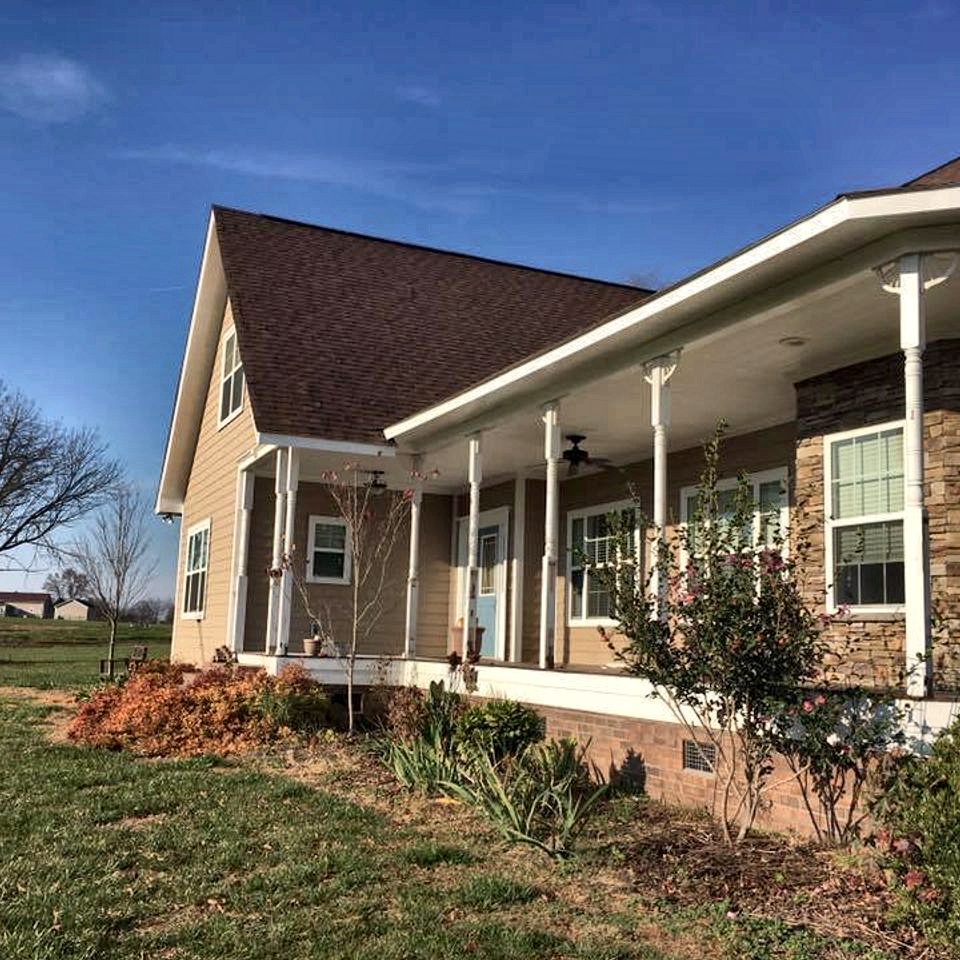
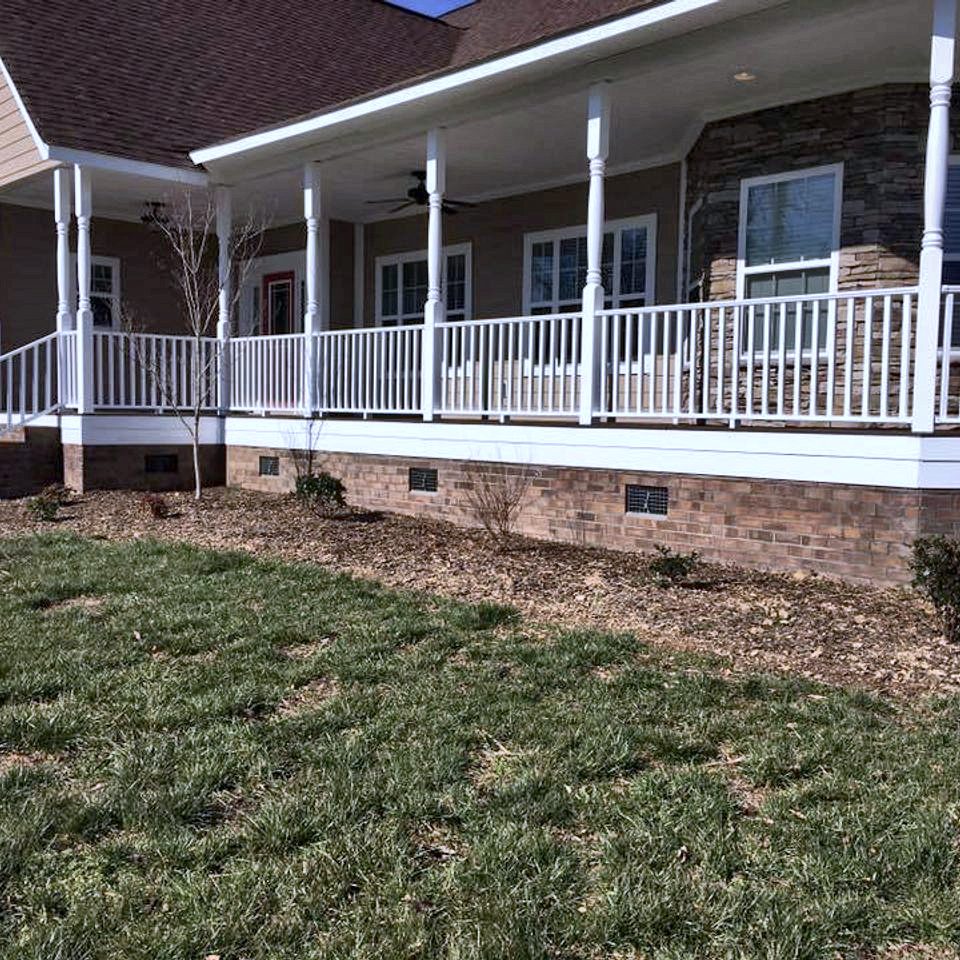
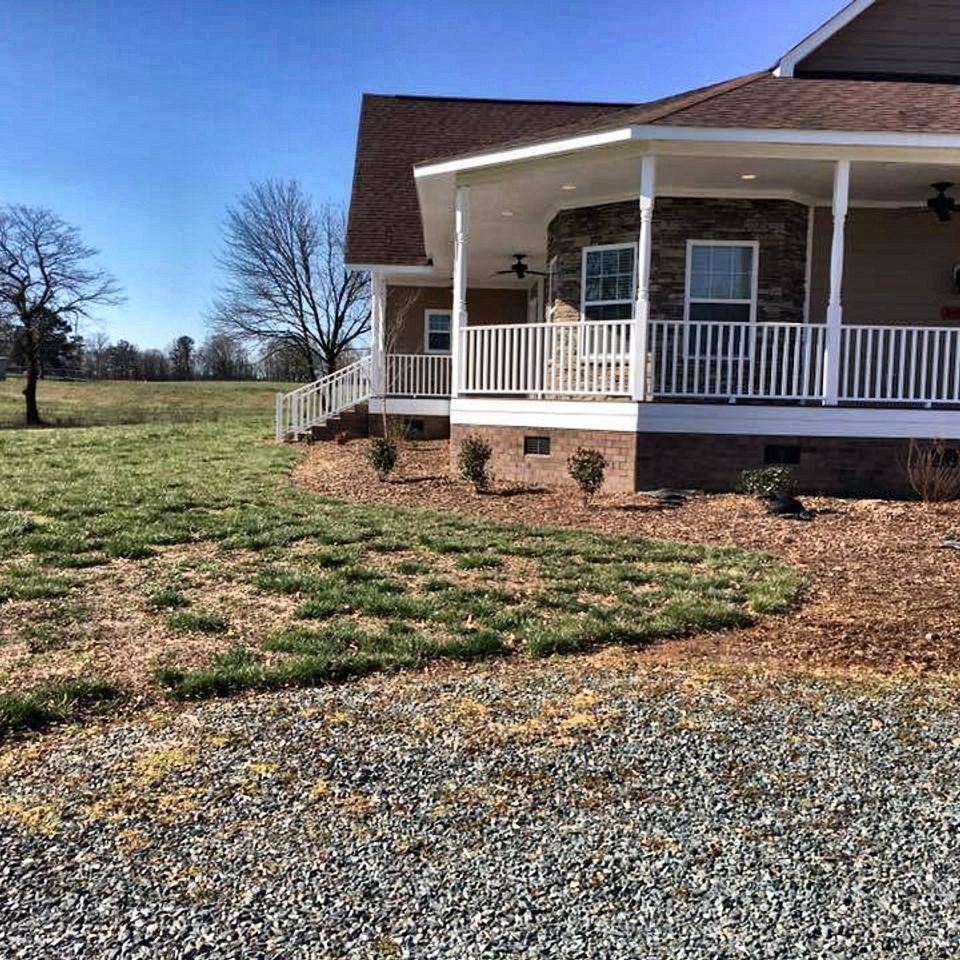
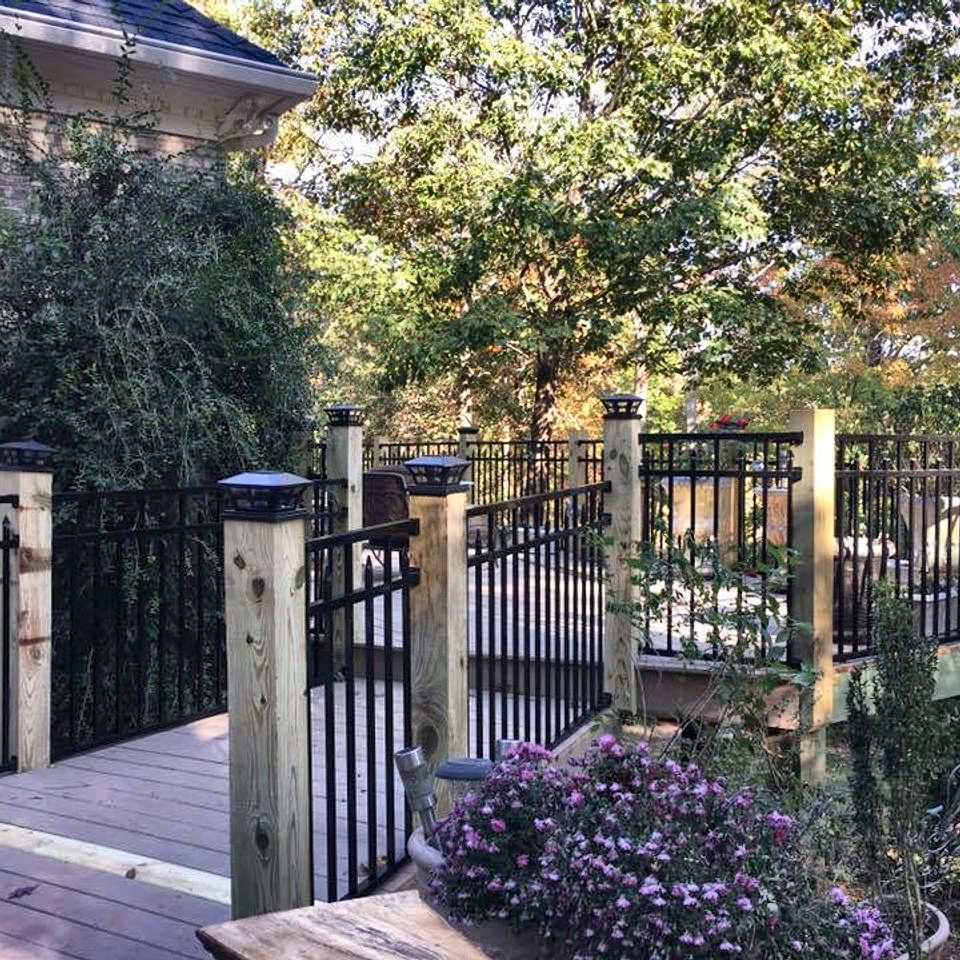
Porches, rails and columns, on real houses.
Photographs of jobs this crew finished. More on the gallery page.
Where we do this
Charlotte, and about fifty miles around it.
The shop is in Monroe. The crew works across Charlotte and the towns around it, on both sides of the state line. Each area has its own page, because the houses are not the same.
On the record
What you can check for yourself.
We would rather publish four facts you can verify than a page of adjectives. Everything below links to the source that holds it.
How long does exterior paint last around here?
Seven to ten years on siding and rather less on south and west-facing trim, when the prep was done. What shortens it is always the same list: paint over chalky or damp wood, no primer on the bare spots, and one coat instead of two. North Carolina humidity and mildew do the rest. The long answer is here.
What time of year should an exterior be painted?
Spring and fall are the easy windows. The constraint is not the calendar, it is surface temperature and dew: the wood has to be dry, the day has to stay above the coating's minimum, and the film needs to set before evening damp lands on it. We work through the summer by starting early and following the shade around the house.
Do you pressure wash before painting, or is that extra?
Washing is part of an exterior repaint, not an add-on to it. Paint does not stick to chalk, pollen or mildew. We also pressure wash as a standalone job — driveways, walks, siding, decks and fences — for people who are not repainting.
What happens if you find rotten wood?
We cut it out and replace it. Rot is a water problem, and painting over it hides the evidence for about a season. When we find it during the wash or the scrape we show you, price the replacement separately so you can see what it is, and carry on. Trim, fascia, soffit, sills, corner boards and porch posts are the usual suspects.
Do you paint brick?
Yes, with a masonry primer and a breathable coating — and only after a conversation, because painting brick is close to irreversible. A brick house with good mortar is often better served by painting the trim, shutters and porch and leaving the brick alone. We will say so.
Will you paint a commercial building?
Yes. Store fronts, offices, multi-tenant buildings and complexes, generally scheduled around opening hours so we are not painting a door someone needs to use. That work lives on the residential and commercial painting page.
Get a free estimate
Book the walk-round before the weather turns.
We will walk the elevations with you, show you the soft boards and the failed caulk joints, and price the repair separately from the paint so you can see exactly what you are paying for.