 Monroe, NC · since 2000

How to Remodel a Bathroom
Most bathroom guides start with tile. The tile is the last thing that decides whether the room lasts. Here is the order a bathroom is actually built in, and why each step waits for the one before it.
- 5decisions made before demolition
- 4stages that cannot overlap
- 50 cfmminimum fan, vented outside
- A bathroom is built in a fixed order, and every stage hides the one before it. Get the order right and most of the risk goes away.
- Five decisions have to be made before demolition, because they are framed into the wall: niches, bench, glass, valve heights and the curb.
- Demolition is where the real price of the job shows up. Rot, a failed pan and a soft subfloor are normal in an older shower.
- In Mecklenburg County, moving a drain or adding a circuit needs a permit and an inspection before the wall closes, whatever the job costs.
- Waterproofing is the job. Tile is the finish. Tile and grout are not waterproof; the membrane under them is.
The order, on one page
A bathroom is a stack of layers, and each one covers the last. Framing disappears behind board, board disappears behind membrane, membrane disappears behind tile. That is why the order matters more than the materials: a mistake in any layer is sealed in by the next one, and the only way back to it is through everything on top.
Here is the sequence a full remodel runs in, and where the waiting happens.
| Stage | What happens | Can it be rushed? |
|---|---|---|
| 1. Decide | Layout, niches, bench, glass, valve heights, curb or low threshold, all in writing | No. A late decision means reopening a wall |
| 2. Demolish | Everything out to the studs and subfloor in the wet area | It is quick. Repairing what it finds is not |
| 3. Rough in | Framing repaired, blocking set, plumbing and electrical moved, then inspected | Only as fast as the inspection is scheduled |
| 4. Waterproof | Cement board, then a membrane with every seam, corner and penetration sealed | No. It cures on the manufacturer's clock |
| 5. Tile | Tile set, thinset cured, grout floated and cured, then sealed | No. Each of those has a cure time |
| 6. Finish | Glass measured to the finished tile, vanity, toilet and fixtures fitted, room painted | Glass has a lead time from the day it is measured |
Five decisions to make before anything is demolished
Tile, paint and hardware can be chosen late. These five cannot, because each one is built into the framing before the board goes on. Change your mind about any of them after that and the wall comes back open.
- Niche position and size. The blocking is framed between studs. A niche in the wrong place means cutting the membrane and sealing it again.
- Bench or no bench. A bench is framed, sloped and waterproofed as part of the shower. It cannot be added to a finished wall.
- Glass panel or door. This decides whether a curb, a half wall or a full return gets built.
- Valve and fixture heights. The plumbing is set before the wall closes. Moving a valve later means opening tile.
- Curb or low threshold. A low or curbless entry changes the floor framing and the drain. It is a rebuild of the floor, not an adjustment.
Add one more while the walls are open: ventilation. Mecklenburg County Code Enforcement's code resource center, as published in October 2026, says each bathroom needs either a window of at least 3 square feet with half of it openable, or an exhaust fan of at least 50 cfm vented directly outside. A fan that dumps into the attic does not count, and it is far easier to duct one properly with the ceiling open than after it is painted.
Demolition is an inspection
The old shower comes out completely: tile, board, pan, and anything soft underneath. This is the day the real scope of the job appears, and it is why nobody honest can give you a fixed number for a shower they have not opened.

What turns up is usually some version of the same story: a pan that was never properly sealed, a rotten sill plate, a subfloor gone soft at the door, or mold behind board that went up without a membrane. None of that can be tiled over. It is repaired here, before anything is rebuilt, and you should be shown it rather than told about it.
Painted walls and trim in a pre-1978 home may carry lead paint. The US Environmental Protection Agency's RRP rule, on its program page updated in June 2026, requires anyone paid to disturb paint in those homes to be lead-safe certified, and it says demolition of painted surfaces is always covered, however small. If you are demolishing yourself, the same page points you to lead-safe practices for do-it-yourselfers. Ask any contractor you hire about it before the first wall comes down.
Home RRP projects that create even a small amount of lead dust are enough to poison your child.
US Environmental Protection Agency, Renovation, Repair and Painting ProgramPermits, and the inspection before the wall closes
This is the step people skip, and it is the one that comes back when the house is sold. Mecklenburg County Code Enforcement's permitting page, as published in October 2026, says residential work costing $40,000 or less may not need a permit, unless the work involves one of a short list of things. For a bathroom, three items on that list matter:
- A change in the design of the plumbing system. Moving a drain, adding a second shower head, relocating the toilet.
- An addition to or change in the electrical system. A new circuit, a new fan, lights in the shower.
- Load-bearing structure. Taking out or cutting into a wall that carries the floor or the roof above.
So the dollar figure is not really the test. A small bathroom where the drain moves needs a permit; a large one where everything stays put may not. When there is a permit, the rough-in gets inspected before the walls close, which is the whole point: it is the last time anybody can see the pipes and the wiring.
Union County, York County and the other counties around Charlotte run their own inspections offices with their own procedures, so if you are outside Mecklenburg, ask yours. The licensing side is separate again, and it is covered in our guide to North Carolina's contractor license threshold.
Waterproofing is the job
A tiled shower does not keep water out because it is tiled. Tile and grout are porous. What keeps water out of the wall is the membrane underneath: lapped at the seams, sealed into every corner and around every pipe, and cured before anybody picks up a trowel.

Three things to ask anybody quoting your shower: what membrane they use, how the corners and the valve are sealed, and how they check it before tile goes on. Each one should get a plain, specific answer. A shrug on any of them is worth more than the price on the quote.
Tile, then grout, then glass
Tile is the stage people picture, and it is the one with the most waiting in it. Thinset has to cure before grout. Grout has to cure before it is sealed. Each of those times is set by the product, not the schedule, and shortening any one of them is how a shower starts failing early.

Glass comes after the tile, and it is measured against the finished tile rather than the drawing. A frameless panel is cut to fit what was actually built, which is why the glass date runs from the day the tile is done, not the day you signed.
Fixtures, then paint, last of all
The vanity, toilet, trim and fixtures go in once the tile and glass are done. The room is painted last, so the cut-in at the new tile edge is done once and nothing lands on a finished surface. In a bathroom that means satin on the walls, semi-gloss on the trim and door, and a flat ceiling, which is the same answer as in our sheen guide.
Painting last is also the argument for one crew rather than four contractors. When the same people do the carpentry, tile, drywall and paint, the caulk line and the touch-up after the glass goes in are somebody's job rather than a dispute.
What you can do yourself, and what to hand over
Plenty of a bathroom is within reach of a careful homeowner. The parts that are not are the ones you cannot see afterwards.
| Task | Reasonable to do yourself? | Why |
|---|---|---|
| Clearing the room, mirrors, towel bars | Yes | It saves time on day one and nothing depends on it |
| Painting the finished room | Yes | Satin walls, semi-gloss trim, done after the fixtures |
| Demolition | With care | Pre-1978 paint needs lead-safe practices, and the rot it finds still needs repairing properly |
| New wiring or a new fan circuit | Only within the homeowner rules | Mecklenburg allows owners to wire a home they live in and are not selling within a year, with a permit, and strongly urges a licensed electrician |
| Moving a drain or supply | No | It changes the plumbing design, so it needs a permit and an inspection |
| Shower pan and waterproofing | Hand it over | It is the layer that decides whether the shower lasts, and it is sealed in for good |
How long it takes
For a full shower rebuild, plan on two to three weeks of working days. The tile is not the slow part: the membrane has to cure, the thinset has to set and the grout has to cure before anything is sealed or the glass is measured. If an inspection is needed, the rough-in waits for it.
A bathroom that keeps its tub and only changes the vanity, floor and paint is much shorter, because there is no wet wall being rebuilt. If it is your only bathroom, say so at the estimate. It changes how the job is phased, and it is a far better conversation to have before demolition than on day four.
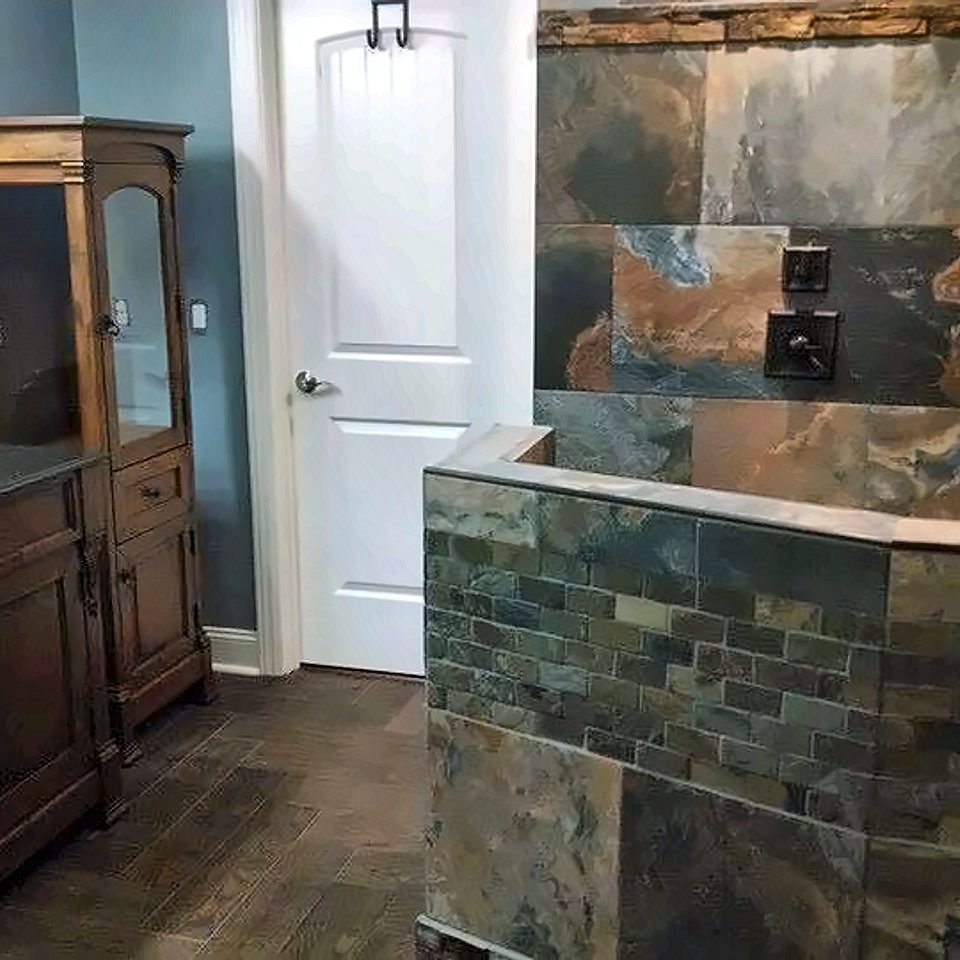
The full scope of what we rebuild, from tub-to-shower conversions to slate and glass, is on the bathroom remodeling page, and more of our own finished bathrooms are in the gallery.
- Mecklenburg County Code Enforcement, Permitting, code.mecknc.gov/permitting, as published October 2026 – residential permits, the $40,000 exemption and the work it does not cover, under N.C.G.S. 160D-1110.
- Mecklenburg County Code Enforcement, Code Info & Resource Center, code.mecknc.gov, as published October 2026 – bathroom ventilation: a window of at least 3 sq ft, half of it openable, or a fan of at least 50 cfm vented outside.
- Mecklenburg County Code Enforcement, Electrical Information for Homeowners, code.mecknc.gov, as published October 2026 – when a homeowner may wire their own house, and when a permit is needed.
- US Environmental Protection Agency, Lead Renovation, Repair and Painting Program, epa.gov, updated 17 June 2026 – certification for paid work that disturbs paint in homes built before 1978.
What is the correct order for a bathroom remodel?
Decide the layout, demolish, repair what demolition finds, rough in the framing, plumbing and electrical, get it inspected, waterproof, tile, grout and seal, then glass, fixtures and paint. The order is fixed because each stage covers the one before it: once tile is on, nobody can see the membrane, and once the membrane is on, nobody can see the framing.
Do I need a permit to remodel a bathroom in North Carolina?
It depends on what changes. Mecklenburg County Code Enforcement says residential work costing $40,000 or less may not need a permit, as published on its permitting page in October 2026, unless it changes the design of the plumbing system, adds to or changes the electrical system, or touches load-bearing structure. Moving a drain or adding a circuit is exactly that, so most real remodels need one. Outside Mecklenburg, ask your own county's inspections office.
Should I paint before or after the tile?
We paint last, after the tile, the glass and the fixtures, so nothing lands on a finished surface and the cut-in at the new tile edge is done once. If you paint first you will be touching up after every trade that follows you into the room.
Can I keep the old tub and just redo the walls?
Sometimes, if the tub is sound and level and the wall behind it is dry. The catch is that you cannot know the wall is dry until it is open. If the old tile is loose, the grout is dark at the bottom courses or the paint is failing above the tub, plan on the tub coming out.
What is the most common thing found during demolition?
Water where water should not be: a pan that was never properly sealed, a rotten sill plate, a subfloor gone soft at the door, or mold behind board that went up without a membrane. It is not bad luck. It is how showers built before membranes were standard tend to age.
How long will I be without the bathroom?
For a full shower rebuild, usually two to three weeks of working days, and most of that is cure time rather than labor. If it is your only bathroom, say so at the estimate. It changes how the job is phased.
Get a free estimate
Want your shower looked at before it becomes a subfloor problem?
We come out, look at what you actually have, and put the order of work and the number in writing. Free, with no obligation.