 Monroe, NC · since 2000
Deck Staining vs Painting
On a wall this is a taste question. On a deck it is a maintenance question, and the two finishes fail in completely different ways.
- 2finishes, opposite failures
- 1answer per deck
- Stain soaks in and wears away. Paint sits on top and peels. That is the whole difference.
- On a horizontal deck floor, peeling is much worse to live with than wearing.
- Rails and posts are vertical, so they can take paint happily even when the floor should not.
- New pressure-treated lumber usually needs to dry out before it takes anything.
- Either finish fails early if the deck was not cleaned and dry when it went on.
The difference that actually matters
A stain penetrates the wood and colors it. A paint forms a film on the surface. Both protect, and either can look excellent. What separates them is how they fail.
When a stain reaches the end of its life it thins and fades, unevenly, in the places that took the most sun and traffic. It looks tired. Re-coating means cleaning and putting more on.
When a paint film fails it lifts, cracks and peels, and water gets underneath and drives more of it off. Re-coating means scraping, sanding and priming first, and on a deck floor with dozens of board edges and gaps, that is a genuinely unpleasant job.
Nobody minds a deck that looks a bit worn. Everybody minds a deck that is peeling in flakes under bare feet.
Chris McManus, Chris' Painting & RemodelingWhich one, for which part
| Part of the deck | What we usually recommend | Why |
|---|---|---|
| Deck floor boards | Stain | Horizontal, holds water, takes foot traffic — a film finish peels and is awful to redo |
| Steps and treads | Stain | Same reasoning as the floor, plus grip matters |
| Railings and balusters | Either, often paint | Vertical, sheds water, and paint holds color and cleans well |
| Posts and newels | Either, often paint | Vertical; paint ties them into the house trim |
| Pergola rafters and beams | Either | Overhead and shaded, so both last well; pick on appearance |
| Deck already painted | Keep painting | Stripping a painted deck floor back to bare wood is rarely worth it |
New pressure-treated lumber
The most common mistake on a brand-new deck is finishing it too soon. Pressure-treated lumber arrives wet, and a finish applied to wet wood does not penetrate, does not bond and does not last.
The practical test is simple: sprinkle a few drops of water on a board. If they bead and sit, the wood is not ready. If they soak in within a minute or so, it will take a finish. Depending on the weather that can be weeks or months.
Bare pressure-treated wood weathers, grays and starts to check in the sun. There is a window between too wet and too weathered, and hitting it is most of what makes a new deck look good five years later.
If your deck is composite
Then this whole question does not apply to the boards. Composite decking is not meant to be stained or painted, and coating it usually creates a maintenance problem where there was not one. Clean it and leave it alone.
The rails, posts and any timber framing that shows are a different matter, and those are often painted to match the house. We build a good many composite decks with painted or powder-coated metal rails for exactly that reason — they are on the contractor services page.
What both finishes need first
Whichever you pick, the preparation is the same and it is not optional.
- Wash it properly. Mildew, pollen and gray weathered fiber all have to come off. Pressure washing at the wrong setting fuzzes the wood, which is its own problem.
- Let it dry all the way through. Not touch-dry — dry. Finishing a damp deck is the most common cause of early failure in this climate.
- Fix the boards that are gone. Soft boards, split ends and popped fasteners get dealt with before any finish. Coating a rotten board just hides it.
- Check the structure, not just the surface. The ledger connection to the house and the footings matter far more than the boards. We look at those first on any deck repair.
Can I paint a deck that was previously stained?
Usually yes, after a thorough clean and a bonding primer suited to the substrate, but understand what you are choosing: you are moving from a finish that wears to one that peels, and you cannot easily go back. Stripping paint off deck boards is miserable work.
Can I stain a deck that was previously painted?
Only if the paint comes off completely, and on a horizontal deck surface that is a strip-and-sand job rather than a wash. Most of the time it is not worth it, and the honest recommendation is to keep painting it or to replace the boards.
How often does a stained deck need doing?
More often than a painted one, and that is the trade-off. A transparent or semi-transparent stain on a horizontal surface in this climate is a regular maintenance item rather than a ten-year finish. The compensation is that re-coating is a wash-and-recoat rather than a scrape.
What about the railings and the posts?
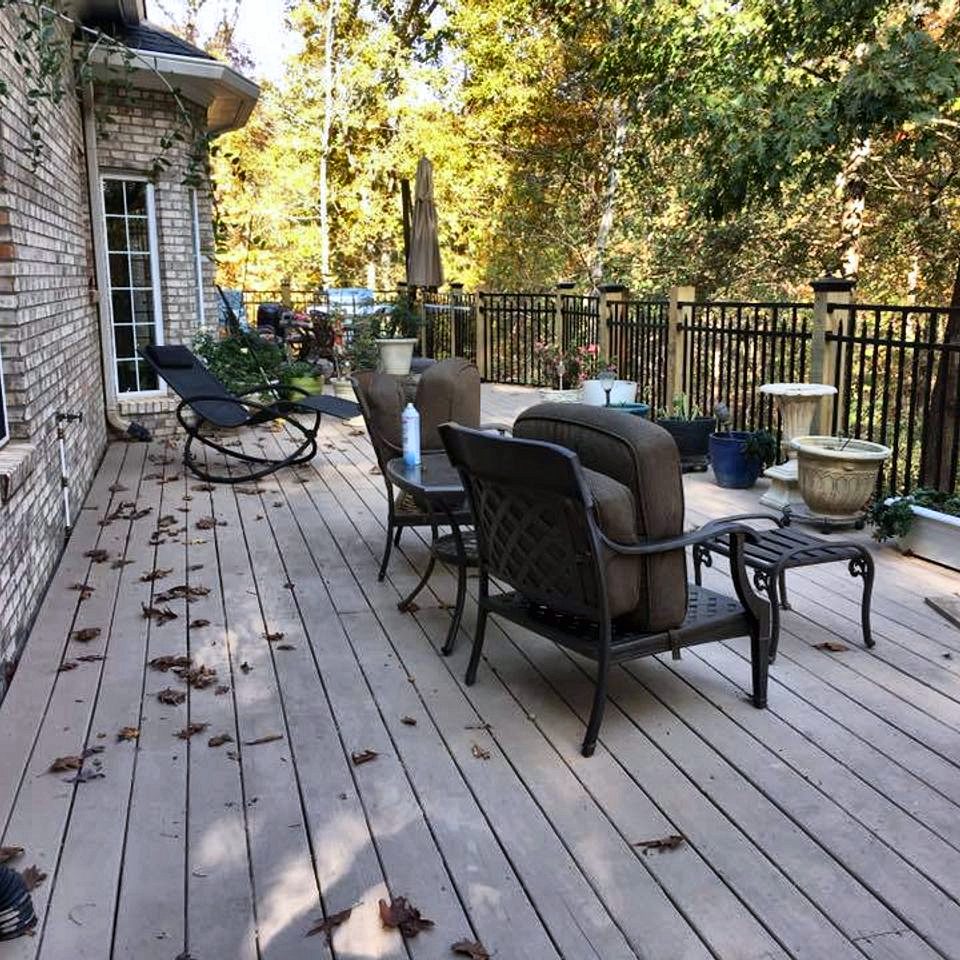
Railings and posts are vertical, so they shed water and last considerably longer than the deck floor whatever finish they carry. A very common and entirely sensible combination is painted rails and posts with a stained deck surface.
Do I need to do anything to a brand-new deck?
Wait. New pressure-treated lumber is usually too wet to take a finish and needs to dry out first. How long depends on the weather and the wood; the practical test is whether a few drops of water soak in rather than beading on the surface.
Get a free estimate
Not sure what is on your deck now?
Half the deck calls we get start with nobody knowing whether it was stained or painted. We can tell you in two minutes standing on it.